
ENDING FACTORY FARMING: THE NEW NATIONAL SECURITY IMPERATIVE


Why our food system has become a hidden threat to global stability
What’s the one thing the war in Iran has shown us? – it’s that things happening in faraway places can have a big effect on all of us wherever we are. Whether it be skyrocketing fuel prices, the impact on our pensions, or the cost of food, it has once again shone a light on the interconnected nature of our world – and how events in one country can affect daily life elsewhere.
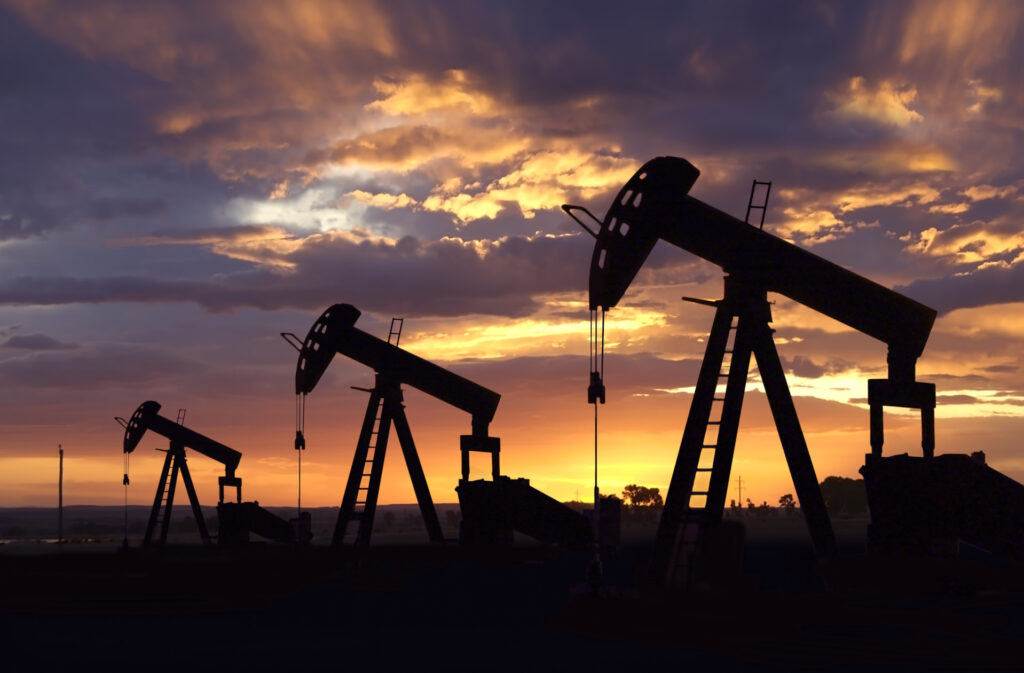
Much of our food these days is reliant on fossil fuels for things like fertilisers and transport. When the US-Israeli-Iran conflict disrupts oil supplies through the Strait of Hormuz, that hits us all in the pocket.
The way we produce food then isn’t just an environmental or animal welfare issue, it’s fundamental to all our futures.
What is really telling then is when governments quietly publish reports late in the day, hoping that nobody reads them.
That’s what happened recently with the UK nationalsecurity assessment – reluctantly released after being held back. It really seemed like the report they didn’t want you to see.
World on a knife edge
As I touched upon previously, it contains a huge revelation: that the world’s food systems are becoming strategically fragile, and the degradation of nature is now directly threatening national stability.
Why am I raising this again? – because the latest conflict in the Middle East makes the report timely and prophetic.
In plain terms, the government report warns that countries will struggle to maintain food security unless they dramatically increase the resilience of their food systems. Which means moving away from fossil-fuel dependent industrial methods and instead embracing nature-friendly practices such as organic and regenerative.
“Global ecosystem degradation and collapse threaten UK national security and prosperity,” it said: “All countries are exposed to the risks of ecosystem collapse within and beyond their borders”.
For years, scientists and environmental leaders have cautioned that ecological decline is not a distant environmental worry but a material risk to the foundations of modern civilisation.
Now, that warning has entered the bloodstream of global security thinking.
The assessment paints a picture in which collapsing ecosystems, disrupted harvests, soil erosion, water scarcity, and climatefuelled crop failures are combining to destabilise societies, drive conflict, and intensify competition for increasingly scarce resources.
It confirms that the great breadbasket regions the world relies upon – from the American Midwest to the Black Sea to South America – are themselves becoming vulnerable as climate extremes batter production capacity.
Around the world, governments have long assumed that food security is guaranteed by global markets, cheap transport, and justintime supply chains. But the assessment illustrates how fragile that assumption has become.
The Unspoken Risk
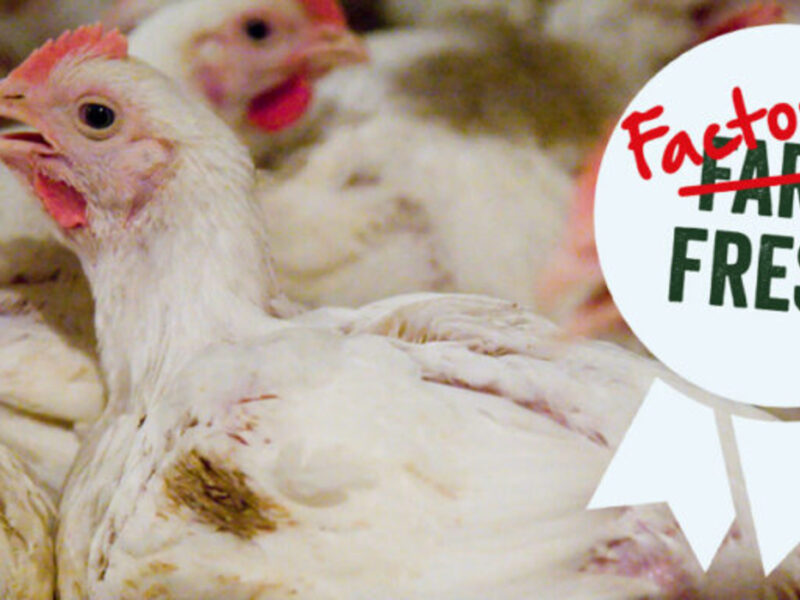
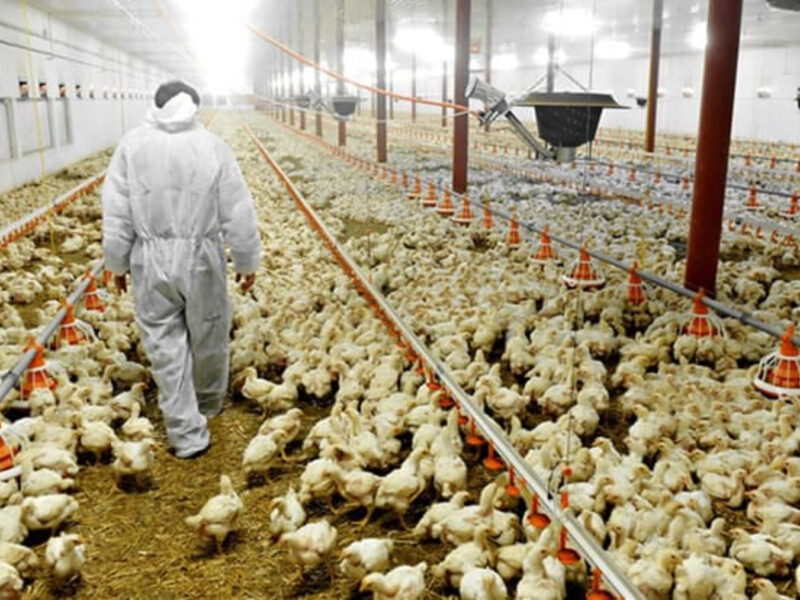
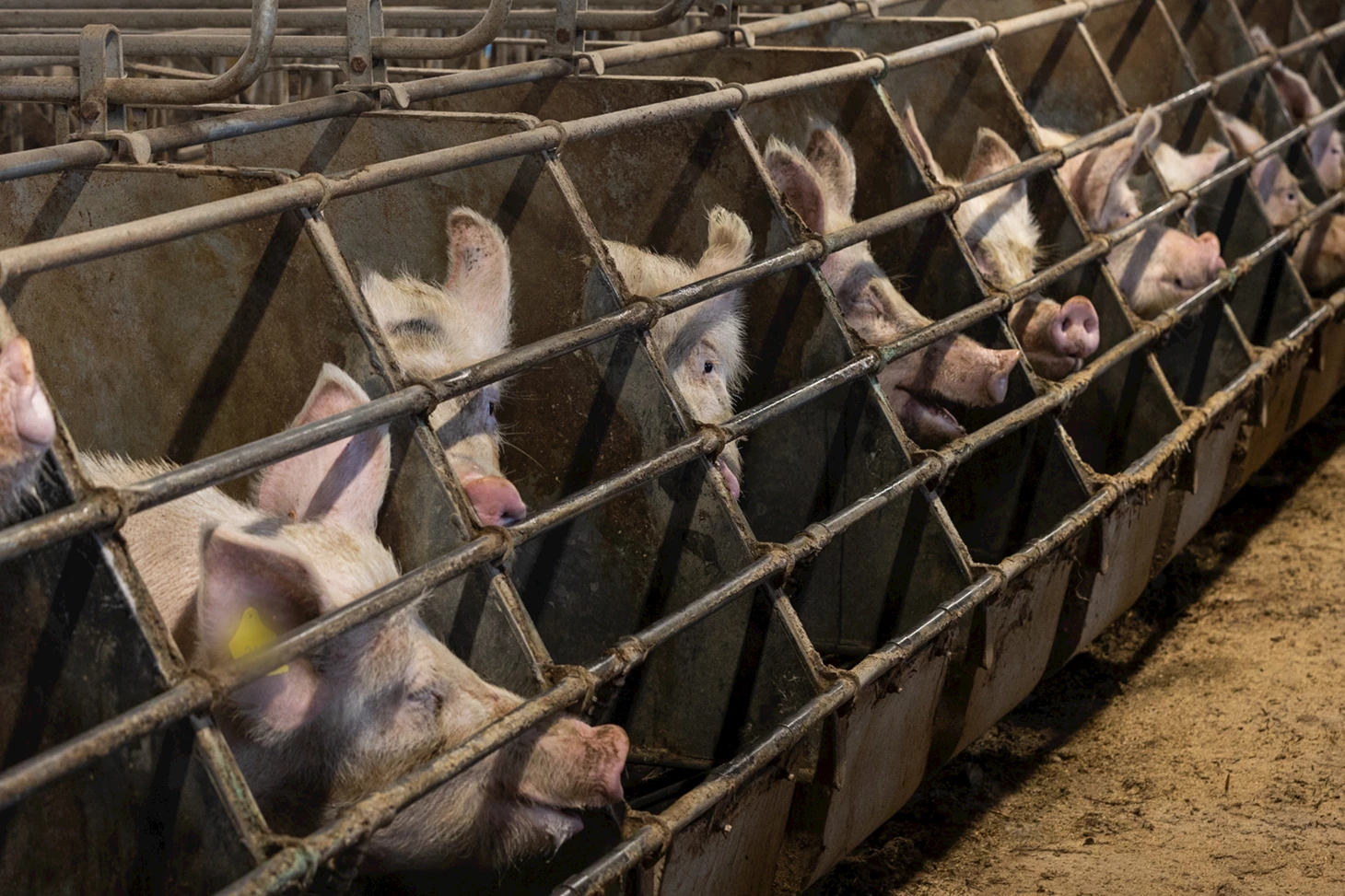
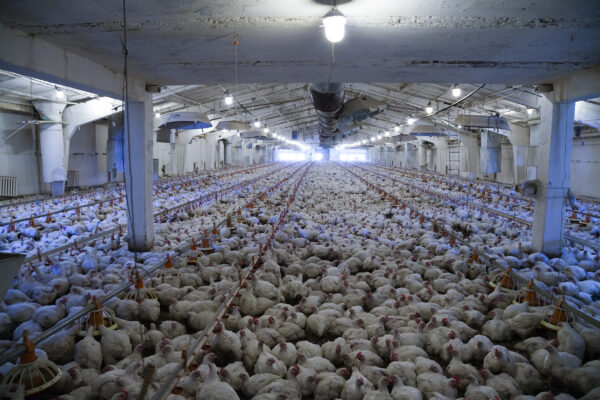
Yet the most striking implication in the report is almost entirely unspoken: factory farming is accelerating the very vulnerabilities governments are now being forced to confront. Industrial agriculture, through its destruction of soils, excessive antibiotic use, chemical dependency, reliance on feed crops, and heavy water footprint, is eroding the natural foundations of global food production.
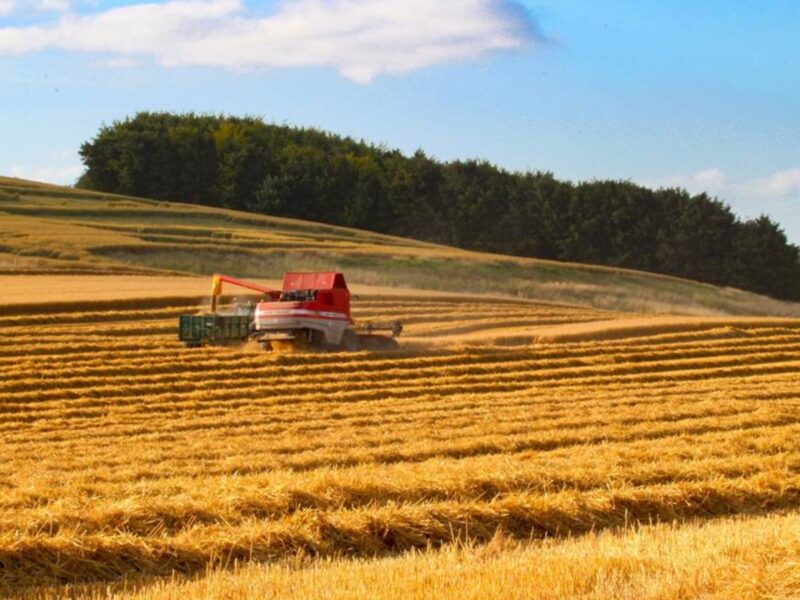
Consider the global grain system. Factory farming diverts vast quantities of humanedible grain – wheat, maize, soya – from feeding people to feeding animals trapped in confinement. In UK and EU alone, the combined use of wheat for animal feed is three times the annual amount normally exported by Ukraine, one of the world’s critical suppliers.
When a conflict or climate shock affects a major exporter, millions of people worldwide feel the consequences because so much of the crop that could feed humans is locked inside an inefficient industrial model.
Ending factory farming is therefore no longer simply an ethical imperative – it’s a strategic one.
Industrial animal agriculture is the world’s biggest cause of animal cruelty, but it is also a primary driver of soil depletion, water pollution, greenhousegas emissions, antibiotic resistance, and biodiversity collapse.
Together, these impacts weaken the resilience of every society on Earth.
Security Begins with the Soil
What would a secure food future look like?
Well, the great news is that we can save the future for our children, not with bombs and destruction, but with beautiful, life-affirming, compassionate solutions. Like transitioning away from intensive animal agriculture towards organic, agroecological, regenerative farming systems that restore rather than exhaust the natural world. Reducing reliance on animal products to free up land for food crops and nature recovery. And scaling up alternative proteins such as cultivated meat, which are increasingly recognised as essential to reducing global vulnerability.
The nationalsecurity assessment makes one thing clear: the world cannot protect its people without protecting the planet that feeds them. Ending factory farming is not just a moral choice. It is now a geopolitical necessity.
Governments must now recognise that food security is not achieved through industrial intensification, but through ecological stability. A resilient food system depends on healthy soil, functioning water cycles, thriving biodiversity, and a stable climate – none of which factory farming can provide.
That means placing the transition away from industrial agriculture at the heart of nationalsecurity planning; redirecting subsidies and investment towards nature-friendly farming and alternative proteins; and embedding animal welfare into the core of foodsystem reform.
It means forging international cooperation on food resilience just as urgently as we do on defence, energy, and diplomacy.
Above all, it means acting now. Because every year we delay, the shocks grow stronger, the losses deeper, and the window for a stable future narrower. The world has been warned – in the clearest possible terms – that the old model is failing. It is time for governments, businesses, and citizens alike to choose a different path.
Note: This is a version of an article first published in The Scotsman on Friday 3rd April, 2026
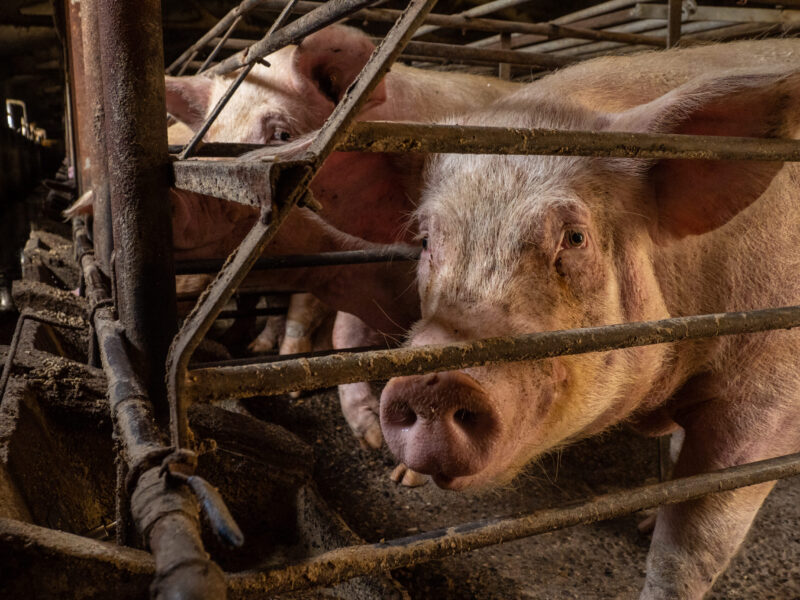
Main Image: Row of intensively farmed pigs in sow stalls | Credit: Compassion in World Farming