
WHAT BIG CHICKEN DOESN’T WANT YOU TO SEE


A comedian’s quest for answers reveals what lies behind cheap chicken
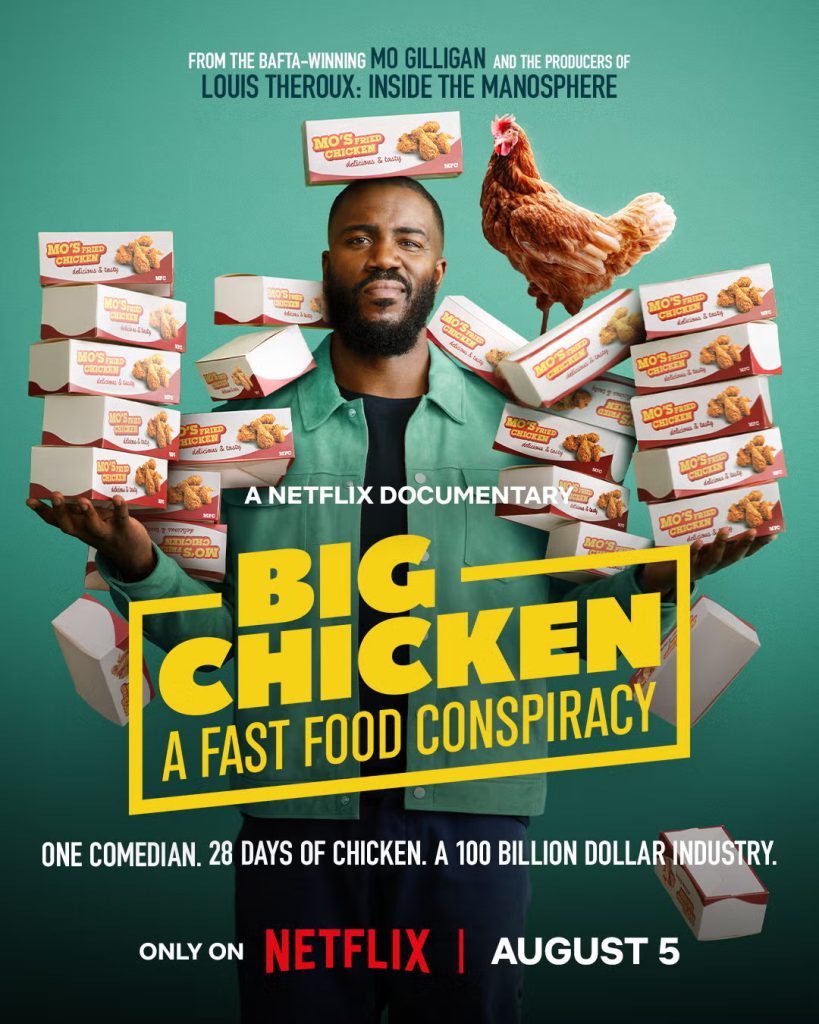
Would you put your health on the line to make a point? Well, comedian Mo Gilligan did just that for his new Netflix documentary Big Chicken. On a trans-Atlantic journey to learn more about the food he’s loved since a boy – fried chicken – he ate only fried chicken meals for a month to the detriment of his physical and mental health.
Gilligan’s film comes at a time when the UK government is pushing to grow the poultry industry and big brands are reneging on their promises to improve chicken welfare.
Even though Gilligan’s journey set out to discover where chicken comes from, he didn’t manage to get access to where the birds actually live. When he interviewed the head of the British Poultry Council, Richard Griffiths, he asked to meet at an actual farm.
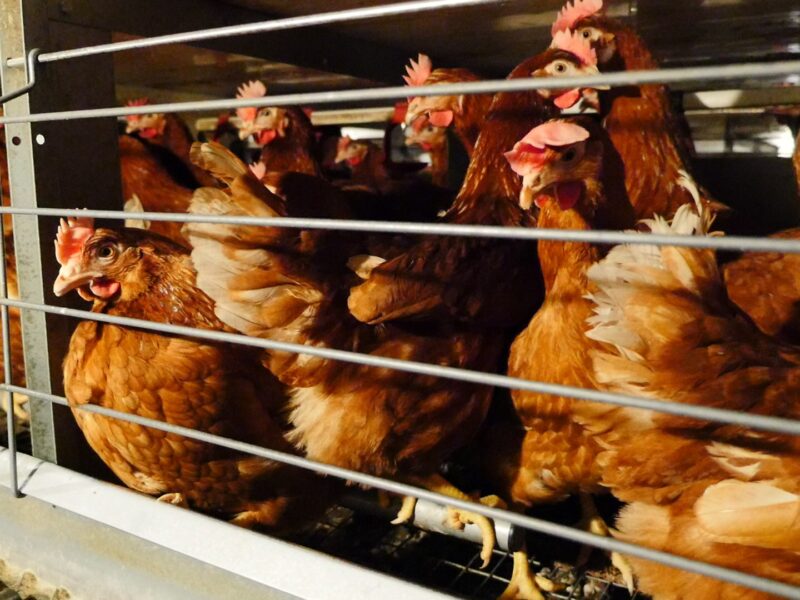
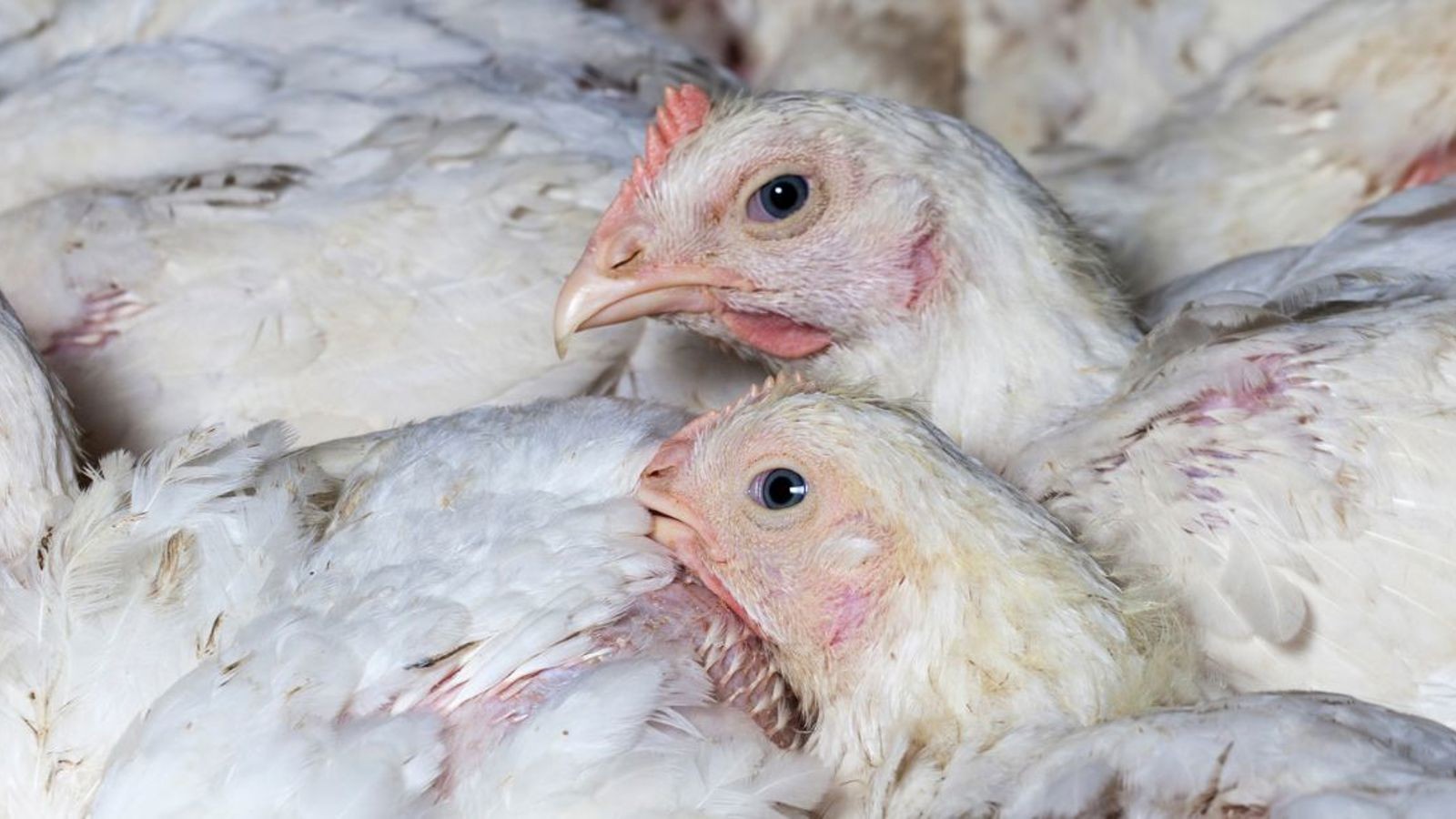
Yet he was told “access would be difficult” and instead they met at Hackney City Farm, in a cutesy public setting with a peacock in the background and a free-ranging chicken pecking blissfully around the courtyard. It was far removed from the reality of industrial chicken farming – tens of thousands of birds crammed together in large indoor factory-style rearing sheds before being slaughtered at five to six weeks old.
Secretive
During the film, 37-year-old Gilligan described being disappointed with himself for not knowing the truth about chicken. But then, no one wants you to know. Which is exactly what people like me have been up against: trying to shed light on what goes on behind closed doors.
As Gilligan himself asks, “the question is, what are you hiding?”.
Gilligan is shown a video by one of the fast-food companies, which had allowed cameras into one of their supplier farms and invited the YouTuber Nico Omilana to look around. Nico’s visit happened when the birds were small and cute and maybe only 15-20 days old.
But as Gilligan later found out, return when the birds are 33 days old and you’d find a much grimmer picture. The fattened birds expand to fill most of the space between one another. Some have grown so big that their legs have given way under their weight and they’re lying in their own waste.
Behind the label
Despite consumers being instinctively concerned about animal welfare, and perhaps because of it, marketing says nothing meaningful about how the birds have been reared.
As Gilligan notes, “I can probably find more information about your secret recipe than I can about where you get your chickens from and how they are treated”.
It shouldn’t be this hard to see how chickens are kept. Surely, if poultry companies farmed in ways we could be proud of, we’d be able to visit a farm to see where the birds we eat come from and how they live?
I’ve been working for years to try to improve the lives of farmed animals.
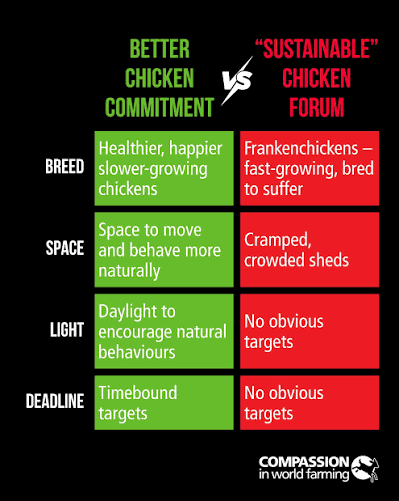
Whilst I always recommend buying organic or free-range chicken, I’m proud that Compassion in World Farming developed the Better Chicken Commitment to help the majority of birds who are confined indoors. Hundreds of companies have committed to giving chickens more room to move and to use slower-growing breeds.
The fast-growing breeds are dubbed ‘Frankenchickens’ because they’re designed to grow so fast that they’re more likely to suffer from lameness and poorer physical conditions than slower-growing breeds.
Broken promises
Earlier this year, 18 major food brands, including KFC, Nando’s and Burger King, went back on their promises and walked away from their Better Chicken Commitment to move to slower-growing birds.
Meanwhile, KFC runs a surreal advertising campaign commanding us to ‘Believe in Chicken’ – has the UK government too fallen under the spell of this propaganda?
Despite Gilligan making himself ill in his endeavour to communicate the hidden costs of cheap chicken, the government is working arm-in-arm with the poultry industry on a ‘poultry sector growth plan’.
They want to produce more chicken in the UK and remove ‘barriers to growth’, including ‘planning and regulatory processes’. It’s a plan for Big Chicken, written by Big Chicken, with government support. This is a recipe for disaster.
Against the grain
The government’s Land Use Framework says it aims to grow poultry production to “strengthen domestic production” and “maintain food security”. This stretches the definition of ‘domestic production’ because, whilst the birds are housed in the UK, they’re reliant on much of their feed coming from overseas, and that threatens our food security.
In the light of this summer’s failing harvests, we urgently need to improve our food security. Growing more crops to feed more animals is a form of food waste that we just can’t afford.
It’s far more efficient for us to use our limited and precious fertile land to grow crops to feed people directly. We should be growing more beans and pulses to meet our protein needs. Diversifying our diets would improve our health, as well as the resilience of our food system.
Producing more chicken also flies in the face of recommendations from the Climate Change Committee that we ought to be reducing our consumption of meat and dairy. If this drought-ridden summer doesn’t wake the government up to the urgency of this task, I don’t know what will.
As I shared with Gilligan in his documentary, decent, humanely reared, sustainable, healthy food should be a basic human right. Sadly, we’re still a long way off from that. The government really shouldn’t be promoting Big Chicken. It should be pushing for Better Chicken and developing a coherent food policy that protects consumers, animal welfare and the climate.
Note: A version of this article was first published in The Scotsman on Friday 4th September, 2026
Main Image: Credit: CIWF