
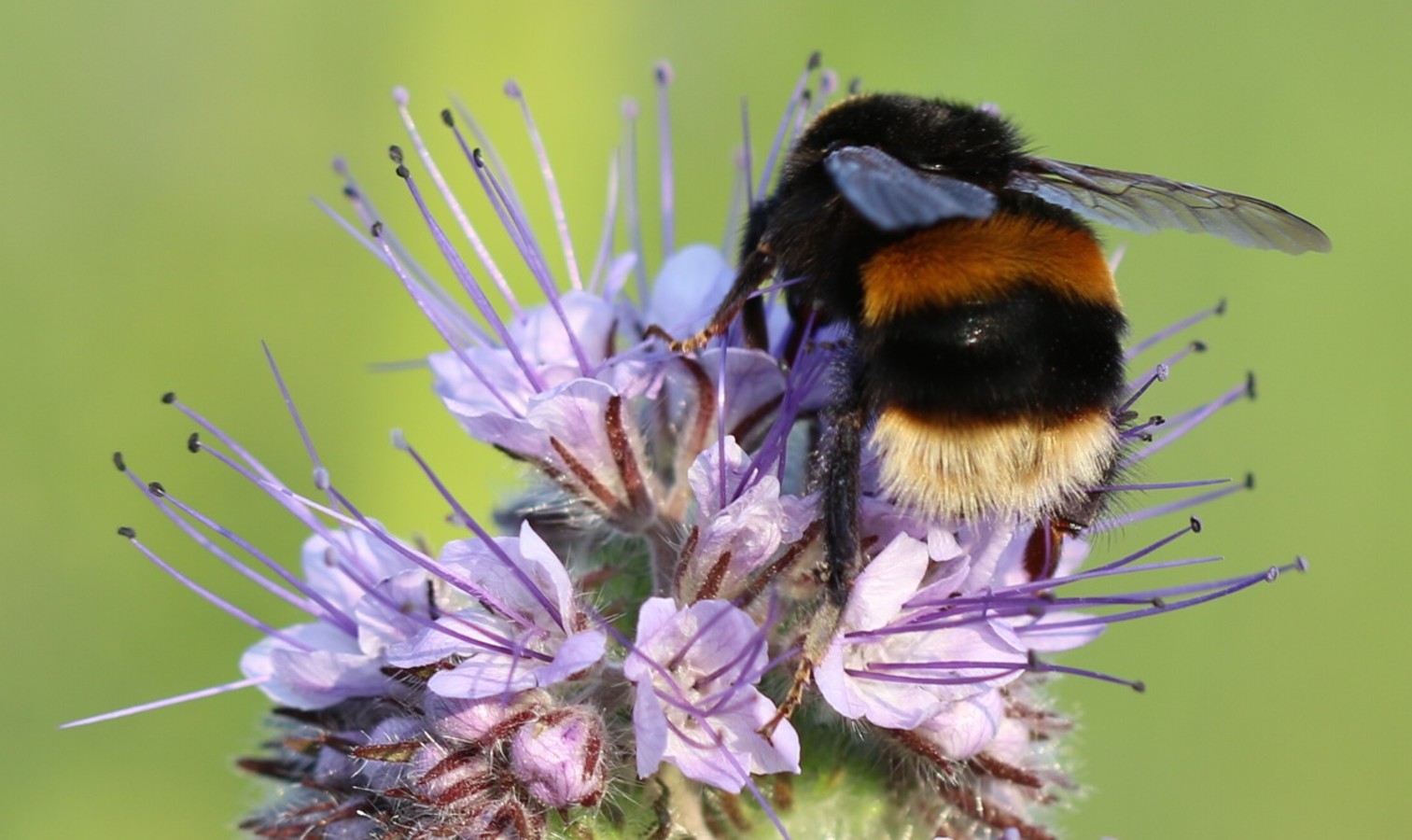
FOR THE LOVE OF BEES


Why Learning to Look More Closely Matters
“I felt deep pang of loss when she passed,” he said. Her name was Nicki, and she was a leafcutter bee — cherished by wildlife photographer Martin Dohrn.
So fascinated and entranced was Martin by bees that he went on to make an awardwinning film, My Garden of a Thousand Bees, shot entirely in his small wildlife garden in urban Bristol.
“Scientists have shown that honeybees can recognise individual people,” he remarked, “so why wouldn’t she recognise me?”.
Learning to see
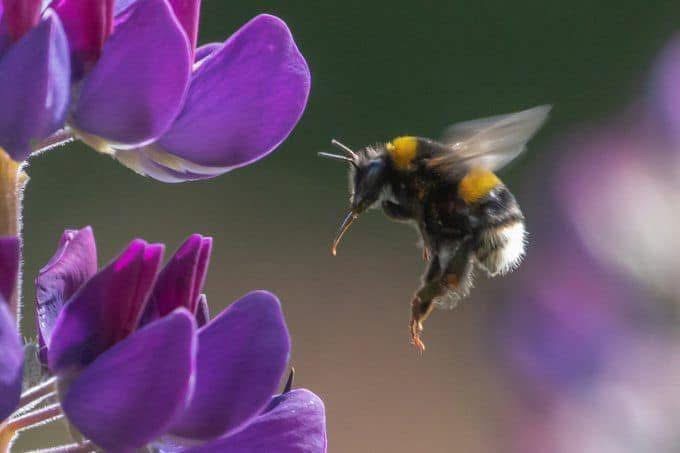
Using oneofakind lenses, Martin filmed more than 60 species, from our largest bumblebees to tiny scissor bees. Over the course of months, observing at such close quarters, he came to recognise individual bees by sight, offering a glimpse into their lives that had never been seen before.
The resulting documentary is a remarkable achievement and has rightly received widespread praise.
There is something quietly radical in that level of attention. In a world that rushes past the small and the easily overlooked, Martin chose to stop, crouch down, and watch. What he discovered wasn’t just beauty, but relationship — a reminder that when we truly notice other lives, however small, our assumptions about the natural world begin to fall away.
Hidden minds
As scientists learn more about our fellow species, it has become increasingly clear that bees, too, have a capacity for emotional responses. Stephen Buchmann, a pollination ecologist who has studied bees for more than forty years, puts it plainly.
“Bees are selfaware, they’re sentient, and they possibly have a primitive form of consciousness,” he said. “They solve problems and can think. Bees may even have a primitive form of subjective experience.”
For Buchmann, this has profound implications for agriculture, given bees’ essential role in producing our food.
“We are blasting bees with huge amounts of agrichemicals and destroying their natural foraging habitats,” he warns. “Once people accept that bees are sentient and can suffer, I think attitudes will change.”
Quiet providers
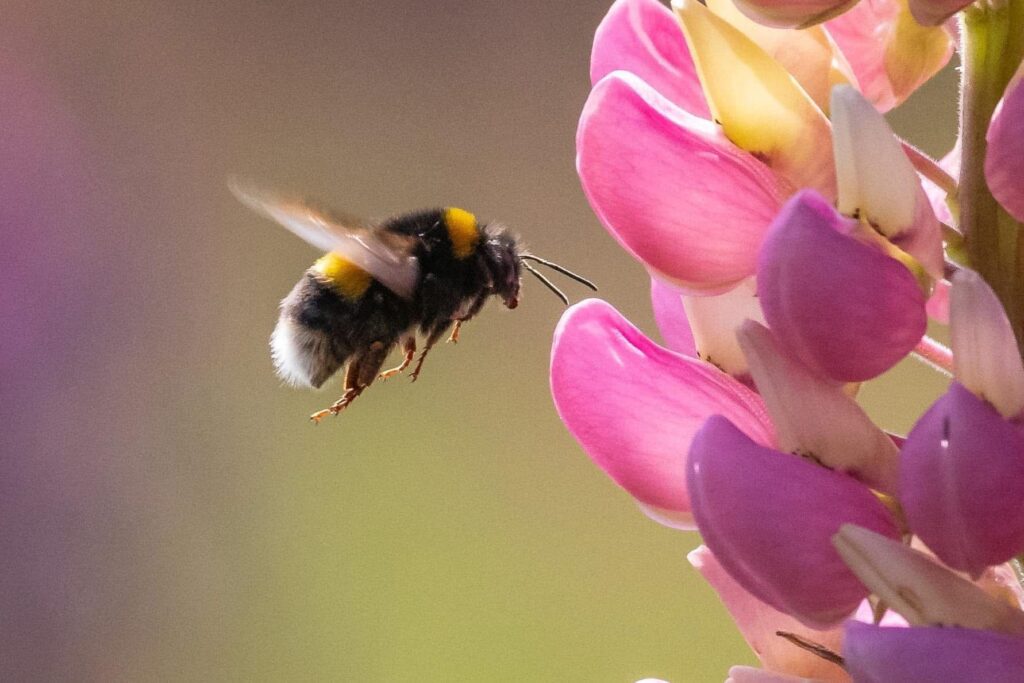
This World Bee Day (20 May), more than ever, there is growing recognition that bees are not only a source of wonder, but vital to our survival. Around a third of the food we eat depends, directly or indirectly, on the daily routines of these small, industrious creatures. If we know what’s good for us, we’d better look after them.
Their fate is inextricably linked to our own — and they are in trouble. For centuries we’ve treated pollinators as background noise. Only now, as the buzz fades, do we realise what they were holding together.
As Dr Lynn Dicks of the University of Cambridge has said: “What happens to pollinators could have huge knockon effects for humanity. These small creatures play central roles in the world’s ecosystems, including many that humans and other animals rely on for nutrition. If they go, we may be in serious trouble”.
Nearly a quarter of all bumblebee species in Europe are now threatened with extinction, despite their economic value to the UK alone being estimated at a staggering £690 million a year.
Signs of trouble
Bees ask something uncomfortable of us: humility. These tiny creatures, going about their lives unseen, hold together systems far larger than themselves — systems on which we depend utterly. When they falter, it exposes a deeper truth: that our dominance over nature is an illusion, and that care, not control, is what sustains us.
The United Nations established World Bee Day to raise awareness of the vital role of pollinators, warning that insect extinction is now happening eight times faster than among mammals, birds and reptiles.
Such is the concern over steep insect decline that in some parts of the world drivers are even being encouraged to use apps to identify the number of insects — the socalled ‘bug splats’ — on their car windscreens, a phenomenon scientists call the “windshield effect”.
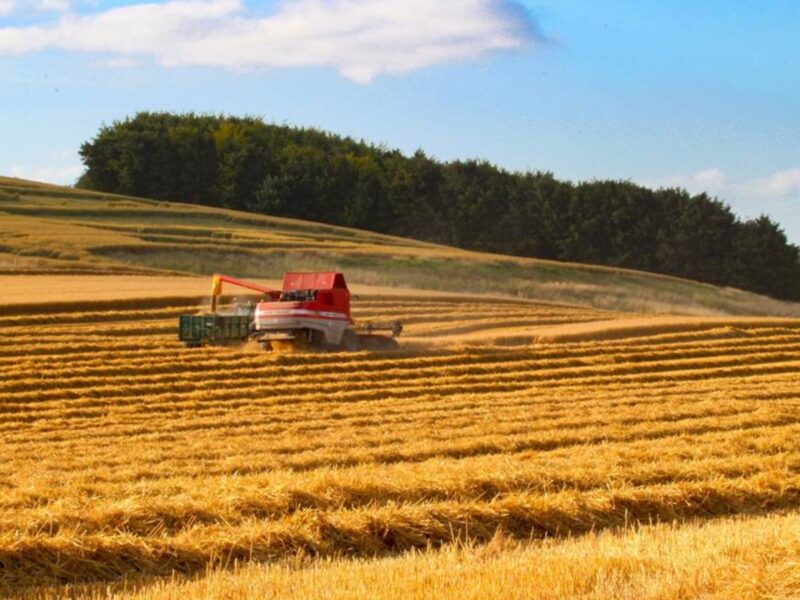
However we look at it, bee and insect populations are collapsing — with industrial farming practices playing a central role.
Fading in the Golden State
I had the scale of this brought home to me some years ago while visiting California. I was standing among endless rows of almond trees, perfectly straight, eerily lifeless. It was one stop on a global journey to understand what was happening to food, farming and the countryside.
I remember the silence. No birdsong. No buzz of bees. Instead, there was the thrum of helicopters and vehicles spraying pesticides on nearby crops — part of an incessant spray regime that had devastated wild bee populations.
The result was extraordinary: some 40 billion farmed bees had to be transported into the state each year, carried by thousands of trucks, to do what nature could no longer manage — pollinate the crops.
Let nature work
Important, then, to celebrate what works, and what gives hope.
Protecting bees — and with them the future of our food — means doing things differently. Not in a dreary or joyless way, but in ways that are beautiful, lifeaffirming and compassionate; ways that allow our countryside to burst back into life.
It means dispensing with chemical pesticides and instead farming in harmony with nature. Growing food in ways that safeguard the essentials of tomorrow — healthy soils, clean water, pollinating bees — while producing tastier, healthier food today.
When I think back to Martin Dohrn in his own little patch of wilderness, and his love for a single bee, I understand why he says that learning to see insects differently changed how he views the world.
Perhaps, in learning to look more closely, it might change ours too.
Note: This is a version of an article that was first published in The Scotsman on Friday 15th May, 2026.
Main Image: credit Philip J Lymbery