
A CENTURY OF SEEING CLEARLY: SIR DAVID ATTENBOROUGH AT 100


A tribute to the man who helped us understand the natural world – and why its fate is inseparable from our own
This May marks an extraordinary milestone. Sir David Attenborough turns one hundred – a full century lived in curiosity, wonder, and deep attentiveness to the natural world.
Few people have shaped our collective understanding of life on Earth as profoundly as he has. For decades, his voice has guided us – calm, precise, and unmistakable – into forests, oceans, deserts and grasslands, revealing the richness and complexity of the living world. It is no exaggeration to say that Sir David is the most trusted communicator nature has ever had.
A master of his craft, yet always humble in its service, he has set the gold standard for wildlife filmmaking. Not simply through technical brilliance, but through storytelling – helping us see animals not as specimens, but as fellow travellers on this planet.
Most recently, the BBC’s Secret Garden returned his gaze closer to home, uncovering the extraordinary life unfolding in our own backyards.
And this year, Netflix will revisit one of the most iconic moments in broadcasting history: that breathtaking scene from Life on Earth, filmed fifty years ago, when Sir David lay quietly among a troop of mountain gorillas in Rwanda.
More than fifteen million people watched that episode when it first aired. I was one of them. When a young gorilla – Pablo – clambered onto Sir David’s back, the moment felt almost impossibly intimate.
Iconic moments
Those few minutes could have ended very differently. Instead, they became perhaps the most famous sequence in wildlife filmmaking, and a turning point in how humanity related to the wild.
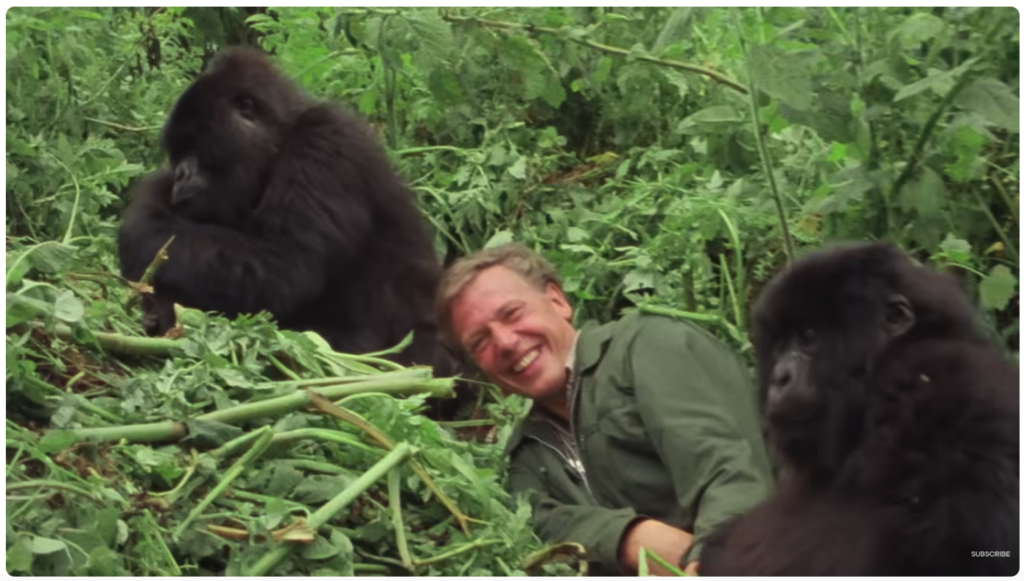
Whichever way you look at it, there is no one quite like Sir David. More than fifty species of animals and plants are named in his honour. An estimated five hundred million people worldwide have seen Life on Earth. Yet his most important achievement may not be measured in viewing figures at all.
For decades, he has carried out what might be the most important job on Earth: explaining, patiently and persistently, why protecting the natural world is not a luxury, but a necessity for our own survival.
And yet, tragically, it seems not everyone is listening.
When words are forgotten
Recently, I shared a stage with TV broadcaster and conservationist, Chris Packham. At the end of the event, I asked what he hoped people would take away from the discussion.
“Cast your mind back to COP26,” he replied, referring to the UN climate summit held in Glasgow in 2021. “When the greatest advocate for life on Earth – Sir David Attenborough – addressed world leaders. He spoke with calm authority, truth and moral clarity.”
Chris went on to describe asking Sir David a few days later how he felt it had gone: “I think they listened. But the problem, Chris, is that the next morning they had forgotten everything I said.”
Those words have stayed with me.
A world in decline
In my lifetime – and even more so in Sir David’s – the natural world has suffered an extraordinary and devastating decline.
Since the spread of industrial agriculture, the planet has lost more than twothirds of its wildlife populations. Today, 96 per cent of all mammal biomass on Earth is made up of humans and farmed animals. Just 4 per cent is wild.
At the same time, our food system is destroying the very foundations on which it depends. A recent report by the Food System Economics Commission estimates the true cost of food – in human suffering, environmental damage and climate harm – at over $10 trillion a year. That is more than food systems contribute to global GDP. In other words, the way we produce food is destroying more value than it creates.
Industrial farming also erodes our soils – the living skin of the Earth. The UN has warned that if current trends continue, we may have fewer than sixty harvests left before the soil is gone. No soil. No food. Game over.
Caring for nature is not optional. It is the baseline for a liveable future.
Life lessons
Yet Sir David has never been a prophet of despair. What I have learnt most from him is not doom, but faith in human possibility.
He believes deeply in our capacity to cooperate, to innovate, and to choose a better path – especially when younger generations are empowered to lead.
As he told world leaders in Glasgow, we are “the greatest problemsolvers that have ever existed on Earth”.
Across the world, I see that spirit alive in farmers restoring soils and bringing back free-ranging animals, in communities bringing wildlife back to the land, and in pioneers reimagining food systems that work with nature rather than against her.
Because the truth is this: we are not separate from the natural world. We are part of it. The air we breathe, the water we drink, the food we eat – all arise from a living web of connections that sustains us.
Sir David has spent a lifetime gifting us with something far more enduring than film: a legacy of attention, humility, and hope – and a challenge to act.
At COP26, he ended his address with words that deserve to be remembered: “If working apart we are a force powerful enough to destabilise our planet, surely working together we are powerful enough to save it… In my lifetime I’ve witnessed a terrible decline. In yours, you could – and should – witness a wonderful recovery”.
As Sir David turns one hundred, let us do him the honour not merely of admiration, but of action.
Note: This is a version of an article first published in The Scotsman on Friday 1st May, 2026
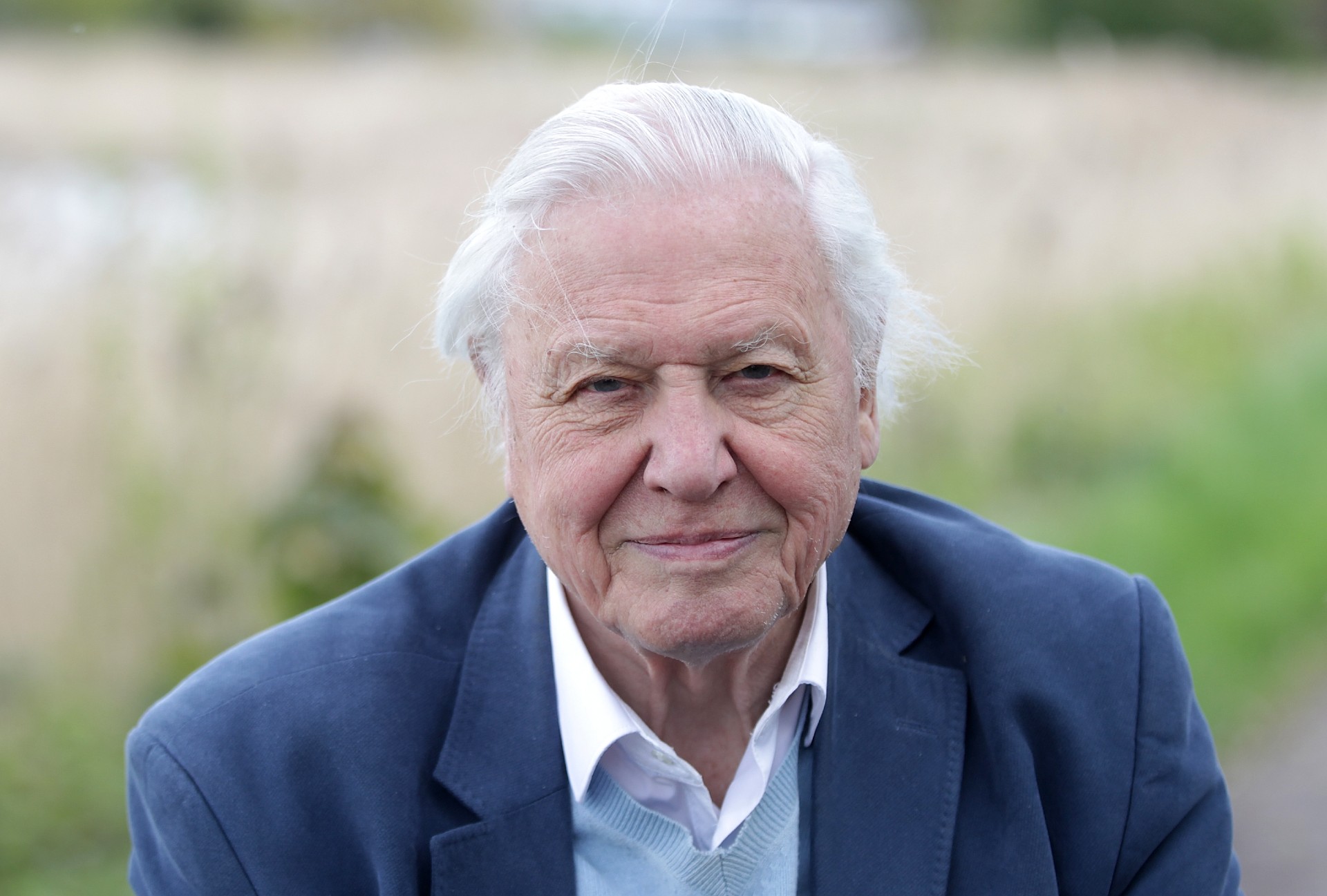
Main Image: Sir David Attenborough | Credit: Danny Martindale | Getty Images