
THE SILENT POLLUTION HANGING OVER OUR COUNTRYSIDE


What’s in the air above our fields – and why it matters
When Michele Franks opened her window one morning, she was met by a smell so overpowering she knew immediately what it meant. The nearby industrial chicken unit was being cleared out. For Michele, who is asthmatic, this is more than an unpleasant inconvenience. Her chest tightens, her breathing becomes laboured, and for days she feels trapped indoors. Every few weeks, when the cleanout takes place, she keeps her windows shut for almost a week and avoids going into her garden.
She experiences similar distress when the surrounding fields are spread with chicken waste. Her eyes sting, she struggles for breath. Michele accepts that the countryside is not scentfree. But she questions whether anyone should be expected to live beside huge volumes of industrial animal muck.
Hard to breathe
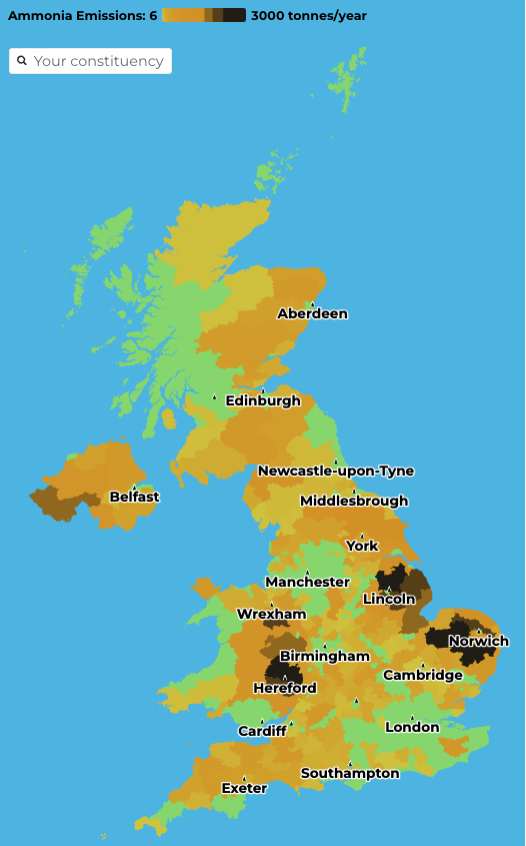
Michele lives in Lincolnshire – one of the UK’s factory farming hotspots – where ammonia emissions are particularly high. Her experience offers a sharp insight into a wider problem that affects the health of people across the country.
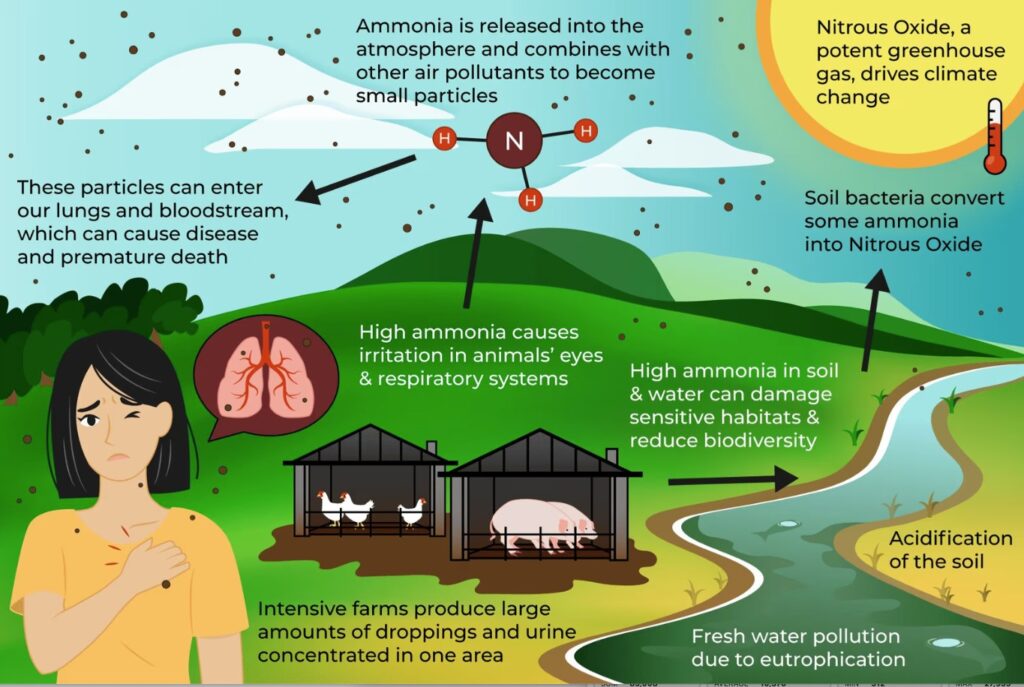
Ammonia is a significant contributor to air pollution, yet it rarely attracts the attention it deserves. It is a nitrogenbased gas essential to food production, but there is now far too much of it.
The consequences are felt by both human health and the natural world. Around 89 per cent of the UK’s ammonia emissions come from agriculture, largely from animal manure, as well as fertiliser use. And it doesn’t just stay in the countryside. Research shows that between 25% and 38% of harmful air pollution in UK cities is the result of agriculture, more than produced by the cities themselves.
Too many animals
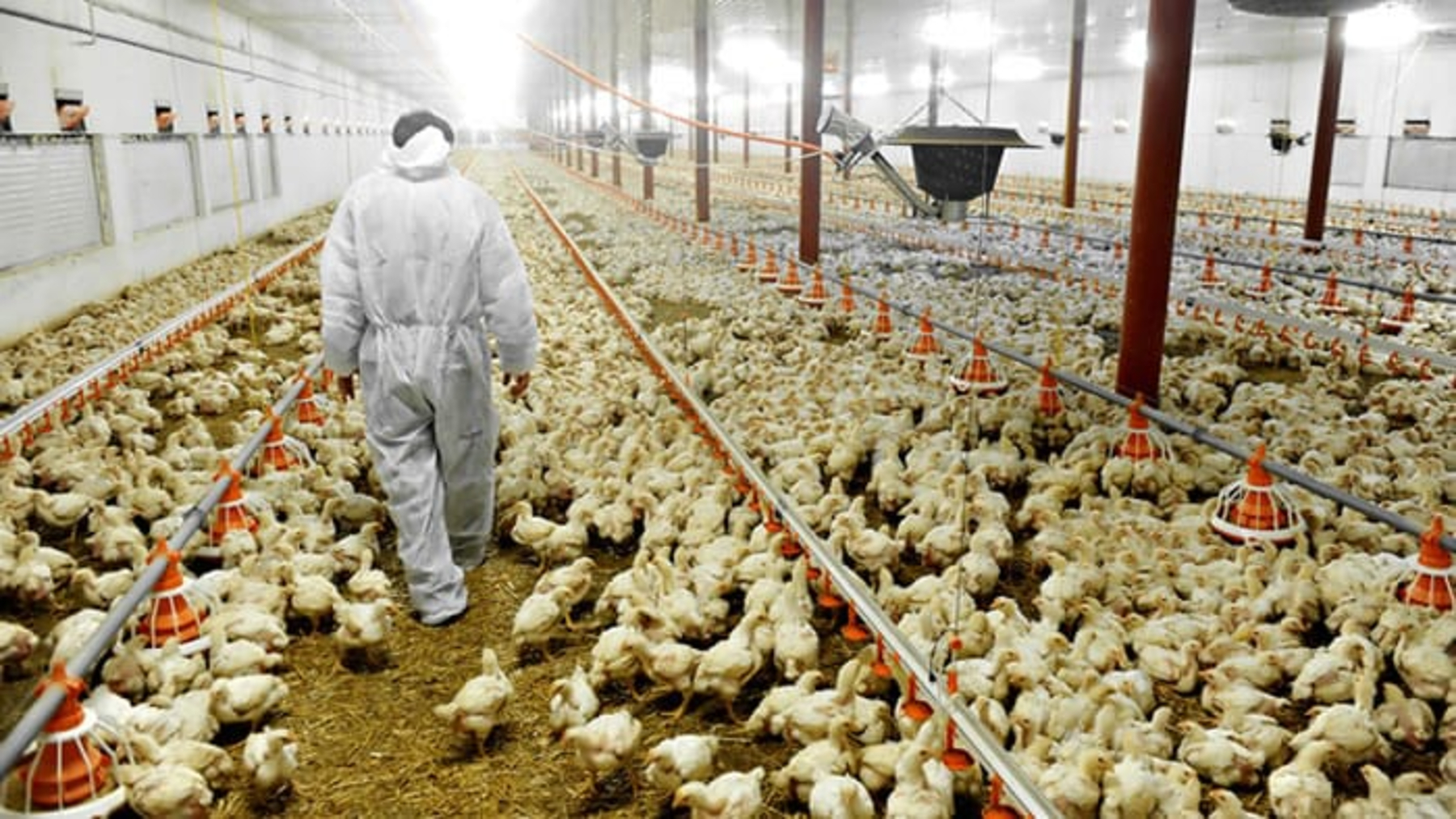
Intensive farming makes this far worse. When large numbers of animals are concentrated in one place, vast quantities of waste are produced in a small area, leading to high local emissions of ammonia. The essential problem: too many animals in too small a space.
New research by Sustain and Compassion in World Farming has mapped ammonia emissions from intensive pig and poultry units across the UK. The results are striking. Counties such as Norfolk, Lincolnshire and Herefordshire emerge as major hotspots, reflecting the dense concentration of these units.
Once in the air, ammonia reacts with other pollutants to form fine particulate matter known as PM2.5. These microscopic particles can penetrate deep into the lungs and even enter the bloodstream.
Health impacts
The health impacts are serious: increased risks of heart disease, respiratory illness, lung cancer and premature death. Emerging evidence also links PM2.5 exposure to type 2 diabetes, impaired cognitive development in children, and neurological conditions such as dementia.
Dr Amir Khan, a GP in Bradford and wellknown health communicator, sees these effects first hand. He describes ammonia from intensive farming as a “major yet often overlooked” contributor to air pollution.
When large volumes are released, he says, “the health impacts don’t stay on the farm – they reach our surgeries, our hospitals and our communities”. Reducing ammonia emissions, he argues, should be seen as an urgent public health priority.
People exposed to ammonia pollution often report irritation of the eyes, nose and throat, along with coughing, chest tightness, headaches and nausea.
Humans are not alone in this sensitivity. Farmed animals kept in highammonia environments can suffer serious eye and respiratory problems, further worsening already difficult living conditions.
Nature’s warning
The impact extends beyond human and animal health – ammonia is toxic to many plants. Even low concentrations can wipe out lichens and mosses – ancient species that have survived since the last ice age. Their loss triggers wider damage, because lichens provide habitats for invertebrates, which in turn support bird populations.
Ammonia also contributes to the acidification of soils and the enrichment of rivers with nutrients, fuelling algal blooms that block sunlight and strip oxygen from the water. The River Wye, which flows through Herefordshire’s intensive poultry heartland, has become a stark example of this, with damaging blooms threatening life below the surface.
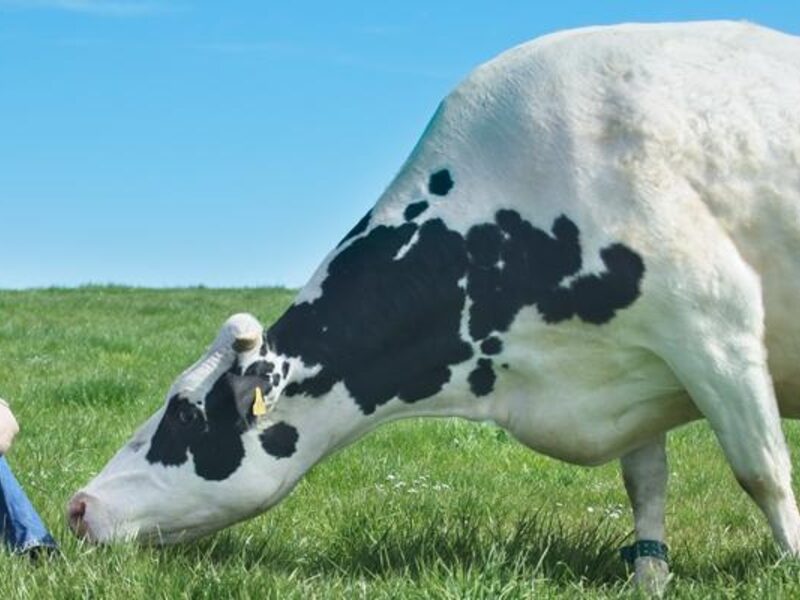
While pigs and poultry often dominate discussion, cattle are responsible for the largest share of animal-farmingrelated ammonia emissions in the UK. In Scotland, cattle densities are highest in the southwest and in parts of the east, including Orkney, Caithness, Aberdeenshire, Banffshire and Kincardineshire.
The risks are greatest where animals are kept indoors, allowing waste to accumulate. Grazing animals generally produce lower emissions, as soils can absorb some of the nitrogen, reducing the amount released into the air.
Clearing the air
For most of us, ammonia pollution is invisible. We don’t see it drifting across fields or settling into our lungs. We simply notice more breathlessness, more pressure on GP surgeries, rivers that look a little greener than they should, or wildlife that quietly slips away.
Because its effects are spread out and gradual, ammonia rarely provokes the same concern as traffic fumes or factory smoke. Yet its impact is nonetheless profound.
The air we breathe should not be the silent price we pay for how our food is produced. Across the countryside, from river valleys to upland pastures, people cherish a landscape that nourishes rather than harms. That sustains life rather than erodes it.
Reducing ammonia pollution asks us to pause and reflect on balance – on how much we take, how much the land can bear, and what we choose to eat. By backing farming that works with nature, we can clear the air in every sense: easing pressure on our landscapes, improving public health and leaving future generations a legacy where both people and nature can breathe freely.
Note: This is a version of an article first published in The Scotsman on Friday 29th May, 2026