
BRAZIL’S CLIMATE SUMMIT IS OVER – WHAT HAPPENS NEXT?


The Amazon’s fate is tied to ours – and COP30 showed just how fragile that link is.
COP30 in Belém, Brazil is over. The question now is simple: what next? The summit ended with progress – but not enough. The UN Secretary General’s opening plea for a “decade of acceleration and delivery” still hangs in the air. Did leaders deliver? Not quite. This 30th UN ‘Conference of the Parties’ on climate change was a waypoint – not the breakthrough the world needs.
Negotiators in Belém failed to reach a deal on phasing out the use of fossil fuels. Eighty countries including the UK and EU pushed for a commitment for a faster phase out of coal, oil and gas. But at this conference by consensus, even with the notable absence of the US, they were shouted down by oil-producing nations.
At this ‘disaster COP’ as one insider described it, things away from the negotiations too seemed chaotic. A fire broke out at the venue itself with delegates having to be evacuated. Thunderstorms flooded the venue, whilst hot, humid conditions made coping at the talks difficult.
The gap between current commitments to act on climate change and what needs to be done remains stark. Going into COP30, pledges were still off the pace in steering the world away from seriously escalating climate impacts. They remain so.
According to the UN Environment Programme, if every nation stuck to their word, current commitments would still exceed the 2 degrees Celsius of temperature rise seen as the upper limit of safe. Global temperatures are now on course to reach 2.3-2.5°C.
Positive takeaways
One positive emerging from the talks was the greater protection for indigenous peoples known for lifestyles in harmony with nature. Significantly, the Government of Brazil used COP30 to announce the demarcation of ten Indigenous lands. The move is expected to prevent up to 20% of additional deforestation and reduce carbon emissions in those areas by 26% by 2030.
Indigenous peoples in Brazil are crucial to biodiversity protection and climate resilience through their stewardship of traditional territories, which experience significantly lower deforestation and higher vegetation regrowth than non-Indigenous areas.
Fading Forest: A COP30 Reality Check
During travels to the Amazon, I’ve seen the pressures these people are under from industrial agriculture. Particularly revealing was time spent with the Mundurukú people and the shrinking rainforest they call home.
Walking with three indigenous tribesmen through dense Amazon vegetation, their machetes sliced a path towards rumours of fresh destruction. They wanted me to see what was happening. Along the way, they cracked open Brazil nuts from the forest floor – hard-shelled pods heavy enough to bruise if they fell on you. It was a taste of abundance in a land under siege.
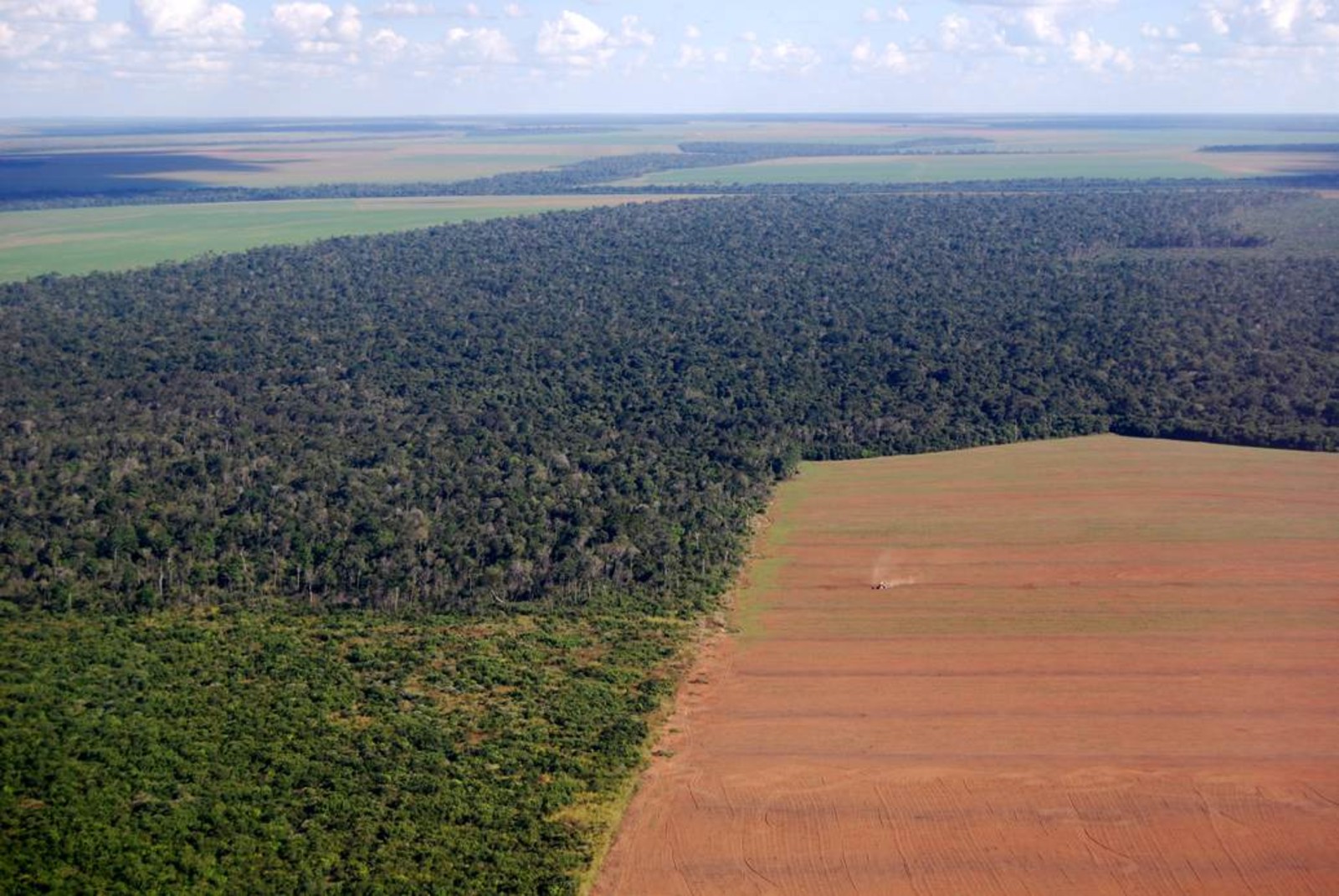
After an hour, the forest opened into a blanket of soya bushes. For a mile, no trees – just crops. Beyond them, the canopy rose again, but something was wrong. The tall trees stood, yet the smaller ones had gone.
Selective logging, Paulo Mundurukú explained, a tactic to fool satellites by leaving the canopy intact. “Come summer, they’ll set it on fire,” he said, his voice heavy with resignation. He had seen it all before. “Deforestation advances every year: someone deforests here, someone else deforests there. And the forest ends up fading.”
That fading forest is not just a local tragedy – it is a global crisis. The Amazon is a carbon sink, a climate stabiliser, a cradle of life. Yet agribusiness keeps pushing deeper, driven by demand for beef and soya for animal feed.
COP30 acknowledged the need to protect forests, but words alone will not stop the tractors Manoel Mundurukú fears.
“My biggest concern is the land-grabbing, the soya crops, the deforestation,” he told me, tears rolling down his cheeks. “No money in the world is worth what this land is worth.”
His plea should echo in every negotiation room. COP30 may have ended, but the fight for the Amazon – and for justice – continues. The next decade will decide whether forests bloom or burn.
A Decade to Deliver
So, what now? COP30 wasn’t a failure – but nor was it the breakthrough many hoped for. It was a waypoint. The climate clock is ticking.
Taking action on fossil fuels is vital – so too on deforestation and its hidden driver: food and agriculture. It’s not just the Amazon that is having great chunks taken out of it. The industrialisation of agriculture has seen crop production for animal feed escalate far and wide. Indigenous peoples, nature, and perhaps our biggest means for tackling climate change – trees – are pushed aside.
A positive from Brazil is that COP30 placed agriculture and food systems amongst its priorities. Climate action on food requires more than transforming production alone. What we consume also needs to change. It was good then to see negotiations at COP30 framing agriculture in a more holistic way to include consumption, emissions and food security.

Closer to home
If COP30 did nothing else, it made the world focus on the Amazon. There, the lives of ordinary people, animals and the finely balanced ecosystem are all under threat. With a sixth of the Amazon rainforest already lost, the fear is that a tipping point could soon be reached where the entire rainforest could dry out and degrade into savannah. And with it would go the means for preserving nature and slowing climate change. While cattle ranching has long been linked to the deforestation of the Amazon, it has become clear that the driving force behind it is closer to home: industrialised soya-fed meat on our supermarket shelves.
Note: This is a version of an article that was originally published in The Scotsman on Friday 28th November, 2025.