

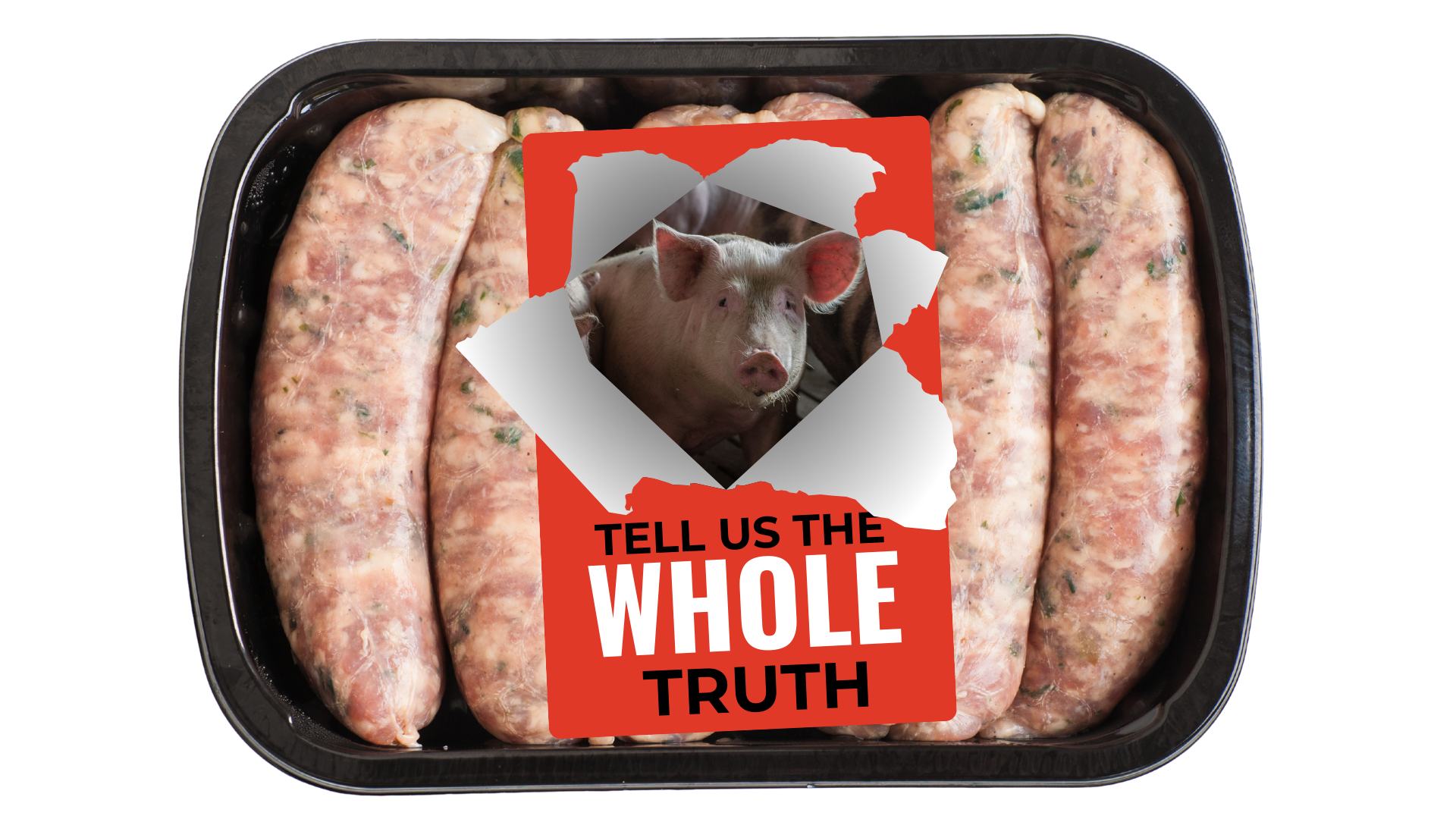
WHAT FOOD LABELS REALLY TELL US – AND WHAT THEY DON’T


Why Shoppers, Farmers and Animals All Need Clearer, More Honest Food Labelling
In today’s supermarkets, it’s easy to feel lost among competing claims about sustainability, animal welfare and ‘responsible’ food. Many of us reach for labels in the hope they simplify the choice. But with a growing number of schemes – from Red Tractor and LEAF Marque to Organic and RSPCA Assured – how well do these labels really guide us?
Red Tractor is the UK’s most widespread assurance scheme, appearing on everything from milk to meat to fresh produce. It promises food “Farmed with Care” and for many shoppers it acts as a baseline guarantee.
Yet, as with any large and complex scheme, scrutiny matters – and recent findings have raised questions about whether the scheme is meeting the expectations the public places upon it.
Last year, the Advertising Standards Authority ruled that one of Red Tractor’s adverts made misleading environmental claims. The complaint brought by River Action challenged advertising for the Red Tractor scheme because of concerns that environmental standards relating to pollution on Red Tractor farms were not being met – including the claim “When the Red Tractor’s there, your food’s farmed with care… from field to store all our standards are met”.
Marking the difference
Still, it’s important to place this in context. Different schemes have different priorities, histories and levels of ambition. Red Tractor was originally designed to provide a foundational level of assurance across millions of products.
By contrast, schemes like LEAF Marque focus on environmental stewardship, while RSPCA Assured concentrates on animal welfare. Organic certifiers such as the Soil Association combine both, setting higher bars on habitat protection, antibiotic use, stocking density and access to the outdoors.
A recent report from the environmental alliance, Eating Better, Sourcing Better, compared these labels and found a wide spectrum of standards. Some schemes set only minimum legal requirements; others go significantly beyond them. These differences mean that when consumers rely on a single “trust mark” to cover everything – welfare, environment and farm viability – the story becomes much more complicated.

Unequal choice
Animal welfare is a good example – according to the report, Red Tractor is seen as assuring compliance with legal standards and guidelines. It doesn’t always reflect higherwelfare systems.
By contrast, organic farming provides consistent outdoor access, bedding, natural light and lowerintensity systems. Pasture for Life takes that further still, focusing on lifelong grazing. RSPCA Assured focuses on raising welfare in key areas without requiring a full shift to organic or fully pasturebased farming.
In other words, there’s a label for most preferences — but they are far from equal.
Where all of this becomes tricky is that supermarkets often present labels as if they are interchangeable: one ‘responsible’ scheme is treated much like another. That lack of transparency makes it hard for shoppers who want to reward genuinely better farming.
Universal benefit needed
It also affects farmers. Many feel burdened by schemes that don’t pay them fairly for the higher standards they do meet. The National Farmers Union of Scotland says that farm assurance in its current form “can be a significant burden” to farmers and supports a review.
Conscientious consumers need labels they can trust and farmers need to be fairly paid for farming well. Good assurance schemes can build this bridge from farm to fork. As Martin Lines, CEO of the Nature Friendly Farming Network says, “Consumers and farmers want real sustainability, not a sticker”.
Their frustration speaks to a wider issue: if assurance schemes are to drive real change, they must work for farmers as well as for retailers and consumers.
So where does this leave the future of food labels?
Honesty is key
Most experts across farming, conservation and animal welfare agree on one thing: clearer, simpler information is essential.
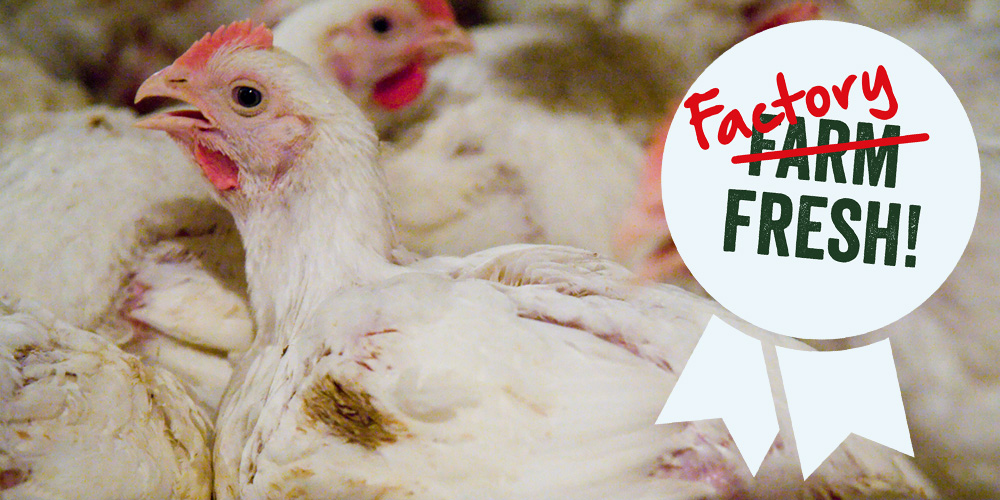
Honest labelling – giving clear and understandable information for shoppers on how their food has been produced – has to be the way forward. We have this for eggs already, so why not meat and dairy? If an egg was produced from a hen in a cage, then the label is legally required to say “eggs from caged hens”.
The same level of straightforwardness isn’t required for chicken meat, pork, beef or dairy. Instead, intensively produced meat or milk can be labelled using broad terms such as ‘fresh’, ‘farm fresh’ or ‘country fresh’.
Make it mandatory
How much easier would it be for consumers if their food had to be labelled clearly according to farming method? Mandatory methodofproduction labelling would allow shoppers to see instantly whether their meat and dairy came from intensive indoor systems, higherwelfare indoor setups or farms providing outdoor access.
This wouldn’t replace assurance schemes, but it would give consumers a stronger foundation on which to choose between them.
For those wanting to cut through the current noise and confusion, my advice would be to put your faith in labels such as ‘free range’, ‘pasture-fed’ or ‘organic’. These are good indicators that the animals were kept on farms using higher welfare practices that are likely better for the environment too. Where animals can experience fresh air and sunshine. In conditions that create happier lives.
Ultimately, labels can be powerful tools for better farming, but only when they’re transparent, trusted and genuinely reflective of what’s happening on the ground. Some schemes already offer that. Others need to evolve. What matters most is that we don’t settle for stickers that obscure more than they reveal.
Consumers want clarity. Farmers deserve fairness. And the food system needs assurance schemes capable of delivering real sustainability, not just the promise of it.
Note: A version of this article was first published in The Scotsman on Friday 20th March, 2026.
Main Image: Tell us the whole truth | Credit: CIWF


