
AI Surveillance in the Barn – what does it mean for Animal Welfare?


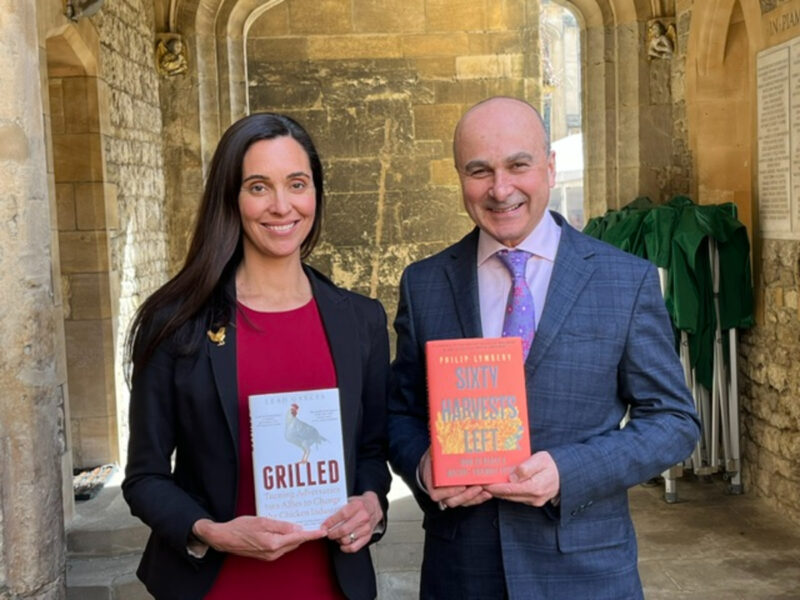
As many of you know, Leah Garcés recently returned to Compassion in World Farming as our Global Ambassador.
Formerly our first executive director in the US and more recently, CEO at Mercy for Animals, we have been so excited to welcome Leah back in this newly created role designed to grow a broad-based movement for an end to factory farming.
Focusing on growing a broad-based movement for change, thought leadership, and cultivating the next generation of leaders, the role is at the forefront of our strategic programme.
Here Leah shares her thoughts in a guest blog, on the role of AI in farming and just what it means, or not, for animal welfare.
Cameras, microphones and ear tags now promise to “objectively” score animal welfare on factory farms. Before anyone cheers, we need to ask what counts, who decides, and whether measuring a cruel system more precisely is the same thing as changing it.
There has been a lot of talk lately about how AI could improve animal welfare on factory farms. This year the theme of EuroTier, the world’s largest trade fair for professional animal farming and livestock management, is “Intelligence in Animal Farming.” I hope to attend in Hanover in November and will report back.
The preview material gives a good sense of what is already deployed in dairy and pig houses: 3D body-condition cameras, calving predictors, tail-posture analysis in pigs with intact tails, vocalization analysis as a stress indicator, and automated documentation that “can automatically record standardized parameters and document relevant events.” The organizers go a step further and suggest that AI-based measurement in barns and at slaughter could produce “transparent and comparable welfare assessments” that serve as the basis for what they call the “fair economic valuation of animal welfare measures.” In other words, the industry itself is proposing that welfare become something you can score, audit and price.
The promise
On the face of it, this is good news. Disease could be caught earlier. The gaps in how we measure welfare, which today rely on occasional audits and a lot of trust, would shrink. And for the first time we could hold operators accountable to specific, observable, measurable problems. Imagine a minimum standard for distress calls, panting or lameness, enforced with continuous data rather than a once-a-year walk-through. No more “we didn’t see it.” No more excuses.
The catch
Now the downside, and I am on the fence about whether the positives outweigh it.
Sensors only measure what they are built to measure, and what they are built to measure is decided by whoever buys and installs them. Farmers consistently name data ownership and control among their biggest worries about these systems: who owns the data, who can see it, how it gets used against them (see Schillings, Bennett and Rose, 2021). That is my worry too, just from the animals’ side. Whoever controls what gets measured controls what “good performance” looks like. If the metrics are set by the integrators and equipment makers, the metrics will describe a well-run factory, not a well-treated animal.
Animal welfare scientists see the promise and issue the same warning. A 2022 paper in Frontiers in Veterinary Science, “Twelve Threats of Precision Livestock Farming for Animal Welfare”, lists among them the neglect of meaningful welfare indicators in system design, farm infrastructure being adapted to suit the technology rather than the animal, systems becoming more industrialized, greater instrumentalization of animals, and, at the end of the chain, growth in animal consumption and harm. Schillings and colleagues note that most of these technologies “focus on productivity and health parameters” and that they can accelerate consolidation because they let a farmer monitor far more animals per person.
Put simply: AI in the barn will entrench productivity unless the welfare metrics are set independently of the companies being measured. And companies have never proven to be good graders of their own papers. The pull toward maximum output at minimum cost will be relentless, a race to the bottom with a dashboard on top. I want to believe these tools could give us real accountability and give farmers better ways to care for animals. But if AI is going to become embedded in animal agriculture, and it clearly is, then those of us who care about animals need to think very carefully about what we want measured, and fight fiercely to set those standards ourselves.
Systemic change versus technocratic change
One advocate put it to me that there is little difference between pushing AI surveillance to improve conditions inside factory farms and the other welfare reforms we campaign for, like getting rid of cages and crates. I strongly disagree, and the difference matters.
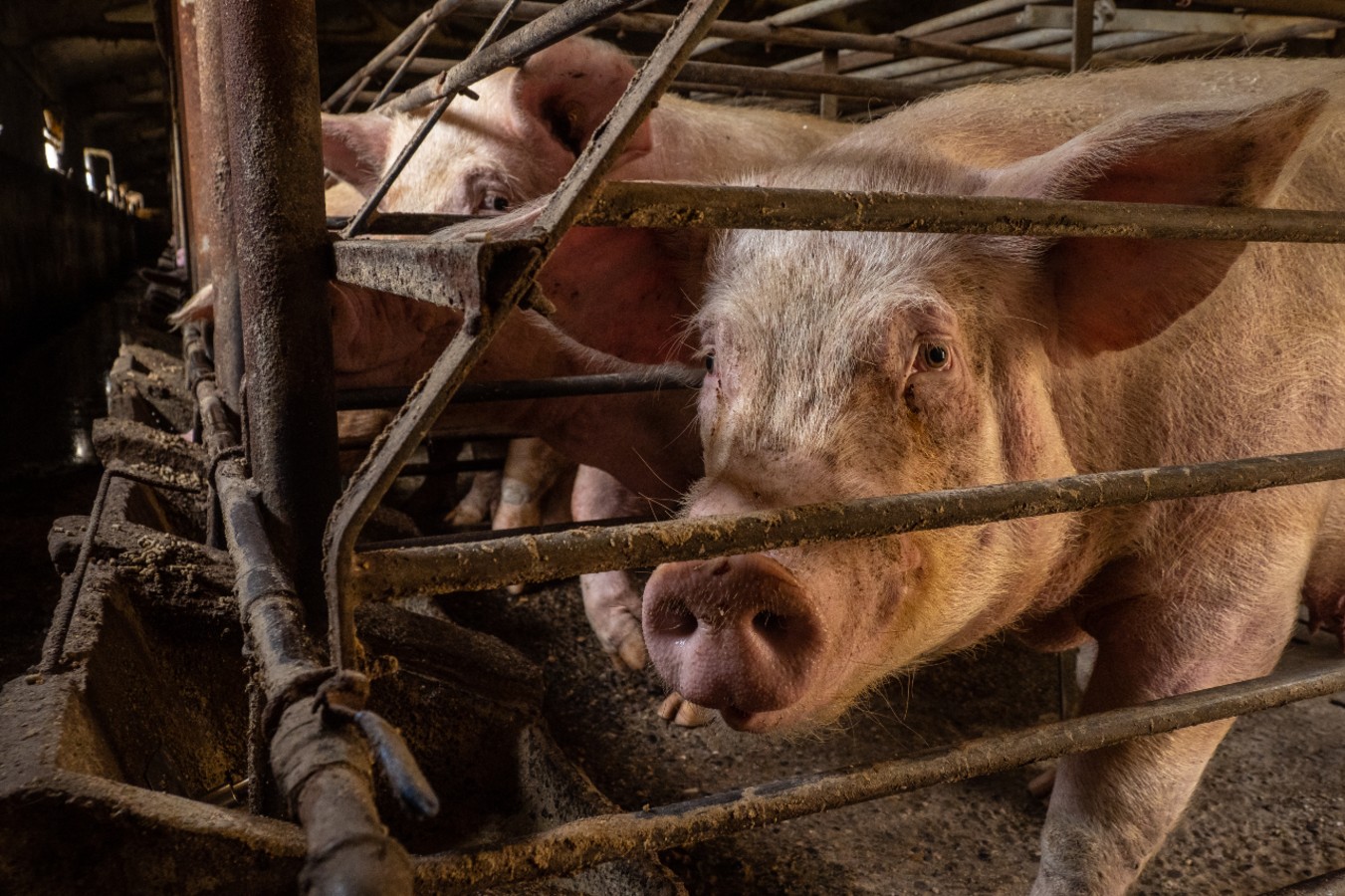
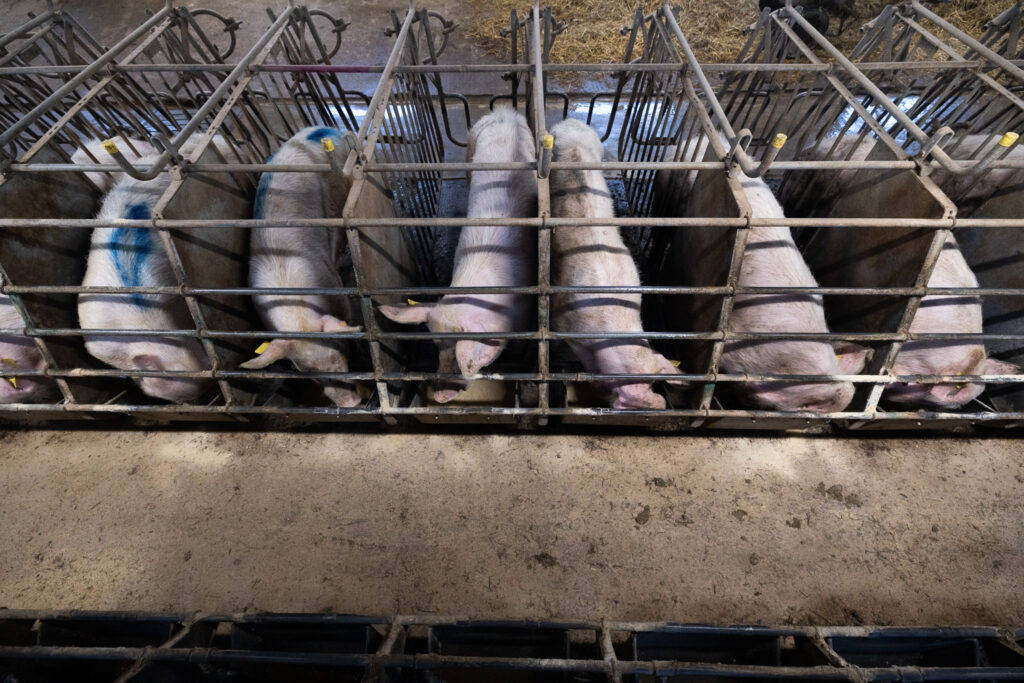
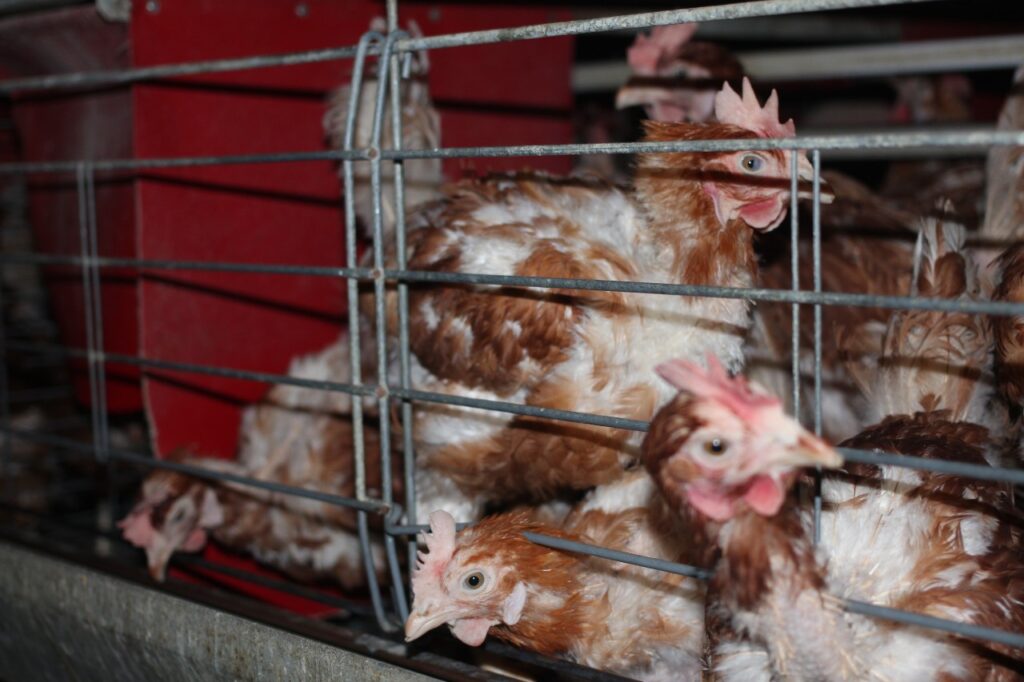
Getting rid of cages and crates is systemic change. It removes a cause of suffering, extreme confinement, that no amount of monitoring can fix. A hen in a battery cage does not need a camera to tell you she cannot spread her wings. A sow in a gestation crate does not need a microphone to tell you she cannot turn around. Take the cage away and the problem it caused goes with it.
AI welfare scoring is technocratic change. It adds a layer of measurement on top of a system whose basic design is the problem, and in doing so it can make that design look more acceptable than it is. The tools don’t lie. They answer a narrower question than the one that matters. A barn can hit every threshold on its welfare dashboard and still be a place no animal should have to live. Worse, a good score becomes a shield: “our welfare is independently monitored” is a sentence that ends arguments, whether or not the monitoring measured anything the animals would care about.
The arithmetic of suffering
Play the AI story forward. Suppose it delivers some minor but real welfare gains, say lighting in a hen house that matches the birds’ circadian rhythms, or a stress alarm that catches heat problems an hour earlier. At the same time it lets one worker manage more animals, one building hold more birds, one company run more buildings. Every efficiency the technology delivers is an efficiency in producing animals, and an industry that can produce more animals will. The scientists warning about precision livestock farming say exactly this: the tools help farmers monitor larger numbers of animals, and larger numbers of animals is where the industry is already heading.
So each individual animal may suffer a little less. But multiply slightly less suffering by many more animals, and the total hours of suffering in the world go up, not down. That is the trap. A technology can be welfare-positive per animal and welfare-negative in aggregate, and the industry will only ever show you the first number.
What we should demand
We need to be deliberate now, while the standards are still being written, about what we want from on-farm AI welfare monitoring. My suggestion is that we back only what passes a two-part test: does it reduce the suffering of the animals in the system, and does it also reduce, or at least not increase, the number of animals in the system?
The second part is not optional. Factory farming’s measurable damage to climate, water, air, rural communities and public health means we cannot afford anything that helps it grow or digs it in deeper. We need both reductions, in suffering and in numbers.
A good proxy question is this: does the change alter the system, or does it just make the system easier to defend? Manure biogas is the cautionary tale. Digesters were sold as a climate fix for factory farms, and instead a 2024 analysis found that dairies with digesters expanded their herds many times faster than the industry average (Friends of the Earth and SRAP, “Biogas or Bull?”). A technology meant to clean up the system became a reason to grow it. Welfare AI could easily follow the same path, with a welfare score in place of a methane credit.
Concretely, I think anyone who cares about animals should insist on a few things before we lend any credibility to “AI-verified welfare”:
The indicators must be set by independent welfare scientists, not by integrators or equipment vendors, and must include outcome measures the animals would care about (lameness, lesions, distress vocalizations, mortality, fear responses), not just productivity proxies.
The data must be accessible to regulators, auditors and the public, not locked inside company systems. Surveillance that only the surveilled can see is not accountability.
Thresholds must be enforceable minimums with real consequences, not voluntary benchmarks that get quietly reset when a company misses them.
And no welfare score should ever substitute for removing the causes of suffering that we already know about. Monitoring a cage is not an alternative to opening it.
AI is going to be in the barn whether we like it or not. The question is whether it ends up measuring what the animals need, or just measuring the factory more precisely. I’ll report back from Hanover on which way the industry is leaning. My guess is we already know.
References
EuroTier 2026, “AI in livestock farming: improved animal welfare, smarter decisions and more efficient processes.” eurotier.com
Schillings, J., Bennett, R., Rose, D.C. (2021). “Animal welfare and other ethical implications of Precision Livestock Farming technology.” CABI Agriculture and Bioscience. link.springer.com
Tuyttens, F.A.M., Molento, C.F.M., Benaissa, S. (2022). “Twelve Threats of Precision Livestock Farming (PLF) for Animal Welfare.” Frontiers in Veterinary Science 9:889623. frontiersin.org
Friends of the Earth and Socially Responsible Agriculture Project (2024). “Biogas or Bull?” foe.org
Main Image Credit: CIWF